On FND: The Haunted House
1/27/2026
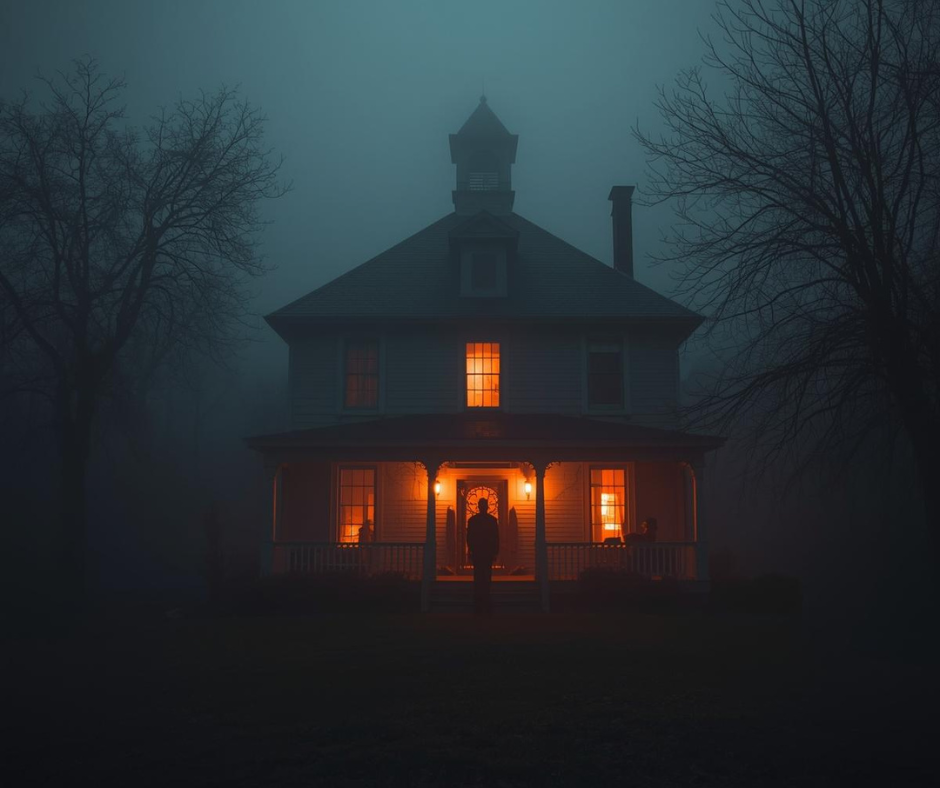
Imagine a big beautiful house. The foundation is solid. The walls are sturdy. The roof doesn’t leak. The stairs don’t creak. The yard is kept. But when you are downstairs, you hear the pattering of feet above. In that one room, the rocking chair rocks on its own. When you walk down the hallway, the lights flicker. You call an electrician to fix the lights. He looks. Everything is fine. He leaves you with a bill for fixing nothing. But the lights still flicker when you walk down that hall.
As it turns out, the house is haunted. It has nothing wrong with it physically. But there are real signs of a problem.
With functional neurological disorders (FND) your brain is the house. The ghost affecting it is the trigger. The signs of the haunting are your symptoms. Your house is fine, but the ghost has taken control. Your brain is fine, but the trigger has taken over. I personally have psychogenic non-epileptic seizures (PNES), a type of FND. For me, the ghost/trigger is stress and trauma. I want to be clear, this is not always the case. According to the National Institute of Neurological Disorders and Stroke, “The fundamentals of FND involve biological and sociological factors. While risk factors in adults include exposure to psychological stressors and a history of childhood adversity, those factors are not seen in all people with FND.”
Now, imagine going to a doctor because you have real physical symptoms and they tell you, it’s in your head. It’s all psychological. It makes you feel like a crazy person. Like everyone thinks you are making it all up. But I am here to tell you, you’re not. Don’t believe the narrative another person spins for your life. You are in control of your life. You are not crazy and you are not making it up. Your disorder is not fake. It is a real disorder with real symptoms.
But the good news is that if these symptoms are caused by stress and trauma like mine are, there is a treatment. You may be able to take anti-depressants and it controls the disorder. You may be able to use therapy. Maybe a mixture of both. Some are even lucky enough to have it go away when they are diagnosed. I was not. Back in late 2021, I was diagnosed with PNES. I went through a program at Norton Neurology in Louisville, Ky. They taught me what PNES was, how to explain to other people what it was, and some grounding tools to try and stop the episodes. I also saw a psychiatrist there that found me a mixture of medicines that worked to reduce my anxiety and depression. Since then, I have gone into remission once. I spent about half a year in remission before the episodes came back. Recently, I went back to therapy. I found that, for me, therapy was the best solution. When I see a therapist for a while, the episodes stop.
The worst part? Telling a doctor what you have. I say PNES first. They don’t recognize it. So, I say the dreaded pseudoseizures. That they understand. The reason I prefer the word “episodes” to “pseudoseizures” is because “pseudo-” translates to “fake.” But the condition is not fake. It is very real. That is the point I want to make here. My brain is the haunted house. You may not be able to see the illness, but it’s there. The symptoms are there. The electroencephalogram (EEG) that records the brain’s electrical activity detects nothing, just like the electrician. But yet when I walk down the hall, the lights still flicker.
Resources:
“Functional Neurologic Disorder | National Institute of Neurological Disorders and Stroke.” Www.ninds.nih.gov, www.ninds.nih.gov/health-information/disorders/functional-neurologic-disorder#toc-who-is-more-likely-to-get-functional-neurologic-disorder-.

Leave a Reply